When Claire noticed the brown patches spreading across her suburban front lawn in Austin, she assumed the drought had finally reached her yard. But the sod felt squishy underfoot and the flower bed near the driveway smelled faintly of mildew — signs the sprinkler was running too long, not too little. She swapped settings, then installed a WiFi sprinkler timer to end the guesswork. Within a few weeks the lawn stopped waterlogging and the perennials perked back up.
Why overwatering happens and the telltale signs
Overwatering is one of the most common mistakes homeowners make because water seems harmless. Yet too much of it can drown roots, promote fungal disease, and waste hundreds to thousands of gallons annually. Common causes include fixed schedules that don’t react to weather, irrigation heads overlapping zones, poor soil drainage, and manual timers left on for convenience.
Concrete signs you’re overwatering
- Soggy soil that stays wet 24 hours after watering — roots need oxygen, and saturated soil suffocates them.
- Yellowing leaves or stunted growth in lawns and ornamentals even when the ground seems wet.
- Moss or fungal patches like dollar spot or root rot; a homeowner in Portland reported moss spreading across 250 sq ft after repeated daily watering.
- Standing water or puddles near sprinkler heads or low areas — a clear sign the application rate exceeds infiltration.
To put the waste in perspective, the EPA estimates that smart irrigation controllers can save up to 8–30% of outdoor water use, and in some higher-usage cases they report savings of up to 15,000 gallons per household annually when replacing manual systems (EPA WaterSense). That’s water and money back in your pocket, plus healthier plants.
Match the right setup to the problem: small lawn, large lawn, or garden beds
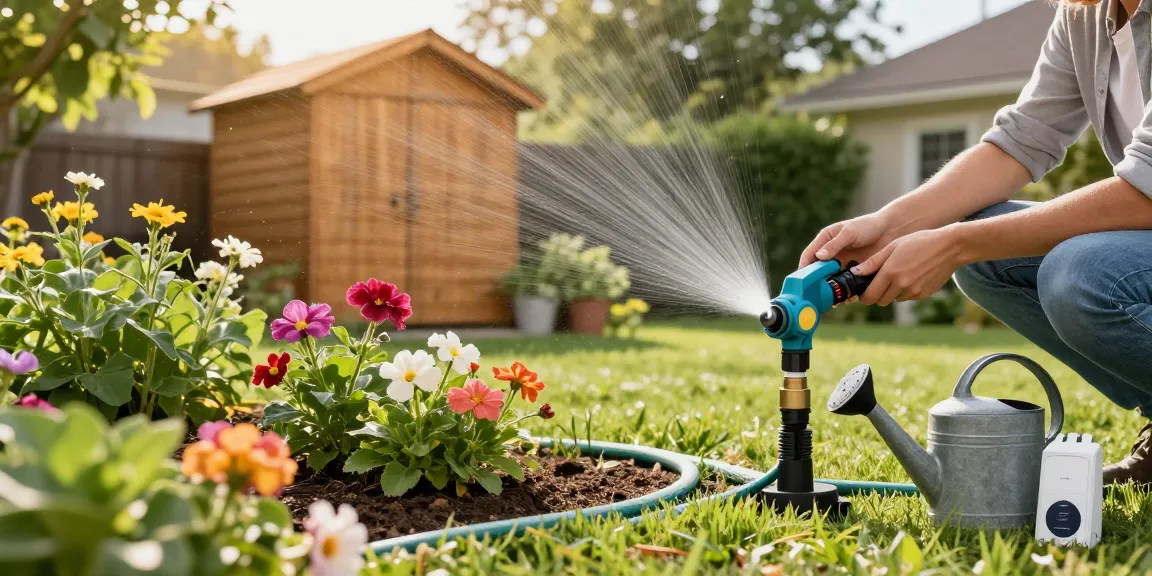
Start by naming the problem: is the lawn soggy everywhere, or only in low spots? Are potted herbs constantly wilted despite frequent watering? The solution differs by situation. A WiFi timer such as the RainPoint model lets you swap between approaches without rewiring your system, so you can match the right setup to the right yard.
Small lawns and patchy coverage
Problem: Small yards often get too much runtime because timers are set for a neighbor’s bigger lawn. Solution: Mobile sprinkler kits or short cycles on a smart timer work best. For example, run two short 10-minute cycles spaced an hour apart to allow absorption. A DIY mobile sprinkler paired with a smart timer avoids flooding the low spots while keeping turf green.
Large in-ground systems
Problem: Fixed underground systems commonly run on blanket schedules that ignore season and rainfall. Solution: A weather-responsive smart controller tied to zone-specific run times corrects that. A homeowner with a 10,000 sq ft lawn cut weekly irrigation from 6 days to 3 by switching to a smart controller that adjusts for evapotranspiration (ET) rates — saving thousands of gallons each month.
Vegetable beds and flower borders
Problem: Broad spray heads waste water on paths instead of root zones. Solution: Precision drip or soaker systems with short, frequent runs. Drip tape or emitters place water at the roots and reduce fungal issues on foliage. For vegetable beds, aim for deeper, less frequent soakings early morning; a drip kit that applies 0.5–1 gallon per hour per emitter can be programmed for 30–60 minutes depending on soil.
Using a smart timer to diagnose and stop overwatering
Smart timers do two jobs: they collect simple diagnostics and act on them. You can stop blanket overwatering by switching from fixed schedules to sensor-informed cycles. A WiFi timer from RainPoint can handle that schedule automatically, pausing runs when rain is detected or when local weather data indicates low irrigation need.
Practical steps to reprogram your system
- Check root depth and soil type for each zone — sandy soil needs shorter, more frequent watering; clay soils need longer, less frequent cycles.
- Reduce run times by 20–50% and observe. If pooled water disappears within an hour but plants remain healthy, you were likely overwatering.
- Enable weather adjustments or connect a soil moisture sensor to prevent unnecessary cycles after rain.
- Use cycle-and-soak (multiple short cycles) to improve infiltration and prevent runoff on slopes or compacted areas.
If you want a tool that helps both measure and adjust moisture automatically, consider solutions that integrate soil moisture sensing and smart scheduling — a quick search will show options designed to fix overwatering issues with a smart irrigation timer right at the root.
Zone-specific fixes and examples — lawns, flower beds, pots, and veggies
Every landscape has microclimates. A shady north side needs far less water than a sun-exposed south slope. Give each area its own response rather than one-size-fits-all timing. Here are concrete pairings you can adopt today.
Lawns (small vs. large)
Small lawn: Use short-run mobile sprinklers or set zone runtimes to 10–15 minutes followed by a 60–90 minute soak period to let water percolate. Example: Claire reduced her front-yard cycle from 30 minutes to two 12-minute cycles and stopped puddles overnight.
Large lawn: Use a zoned in-ground system with a smart controller. Program each zone’s runtime based on slope and soil. Example: A 5-zone suburban yard cut water use by 40% after switching to zone-specific ET-based schedules.
Flower beds and shrubs
Use soaker hoses or drip emitters placed at the root zone to keep foliage dry and roots happy. For a 10 ft x 3 ft bed, a 1 GPH emitter per plant for 30–45 minutes twice a week is an effective starting point — adjust by plant type and season.
Potted plants and window boxes
These dry out fast. A self-watering solution, or a micro-drip with a pressure-compensating emitter, provides slow, steady moisture. Example: A homeowner with 12 mixed container plants installed a micro-drip line on a short daily 10-minute run and saw consistent growth without soggy soil.
AreaTypical RuntimeCycle StrategySandy lawn8–12 min2–3 cycles, short soakClay lawn15–25 min2 cycles with longer soakVegetable beds30–60 minDrip emitters, 2–3x/weekContainers5–15 minDaily short runs or self-watering
When you pair the right hardware with sensible programming, the difference is immediate — less runoff, fewer disease outbreaks, and lower water bills. A smart timer reduces the human error that causes overwatering and helps you tailor water by zone so each plant gets exactly what it needs.
Simple diagnostics and a maintenance checklist
Use these quick checks to confirm your system is curing overwatering rather than masking it.
- After a scheduled run, walk each zone and time how long it takes for puddles to disappear; if they linger more than an hour, shorten runtimes or add soak cycles.
- Probe the root zone with a screwdriver — moist 4–6 inches down is ideal for most lawns; for vegetables aim for 6–12 inches.
- Inspect emitter flow and sprinkler patterns monthly; clogged emitters or broken heads can cause compensatory overwatering in neighboring zones.
- Log water meter readings before and after changes; a visible drop in monthly use confirms success — homeowners often report 20–40% reductions after smart scheduling.
Smart timers and the right irrigation mix don’t just prevent soggy soil — they match the watering setup to each part of your yard. If you want to explore products and kits designed to help with specific scenarios — from potted plants to large lawns — you’ll find options and advice from trusted suppliers. Treat each zone on its own merits, and your yard will repay you with stronger roots and fewer headaches.